
E. Warren Welcomes Michigan’s First Liberian Restaurant

Little Liberia is officially open for business. Image courtesy of Juan Carlos Dueweke-Pérez
"What is going on across the street, and when will it open?”
At Next Chapter Books on the corner of E. Warren and Kensington, this is the single most non-book-related question our customers have eagerly asked over the past year.
So it's been a joy to share that Little Liberia soft-opened in late February on the ground floor of The Ribbon at East English Village (which boasts 18 newly built apartments, plus a restaurant and retail space). Residents of Morningside, EEV, and Cornerstone Village are now a short walk or bike ride (or a flight of stairs) from our state's very first Liberian restaurant, a women- and immigrant-owned celebration of African heritage and cuisine.
Starting this week, the restaurant is moving to full-time hours and will be open Wednesday through Sunday, 11 am to 9 pm.
Chef Ameneh Marhaba is the entrepreneurial spirit behind this exciting new dining experience. Born in Liberia, her mother’s homeland, and raised between Liberia and her father’s home in Lebanon, Ameneh learned to cook at a young age alongside her family.
After immigrating to the United States as a teenager, she regularly spent time alone in the kitchen, learning to cook for herself and, through trial and error, to infuse the rich flavors and traditions of her culture into every dish. What she began as a pop-up in 2016, before pop-ups were really a thing, and before African cuisine was appearing on Detroit’s food scene much at all, is today a welcoming brick-andmortar space for gathering, eating, learning, and connection.
“When I first started cooking as a business, it really was just out of necessity, like this is what I know how to do,” she says. “Maybe it's the only thing I could do because as a new immigrant, I was young, and there weren't a lot of job opportunities. I was like, let me just try cooking and see if that makes anything.”
Ameneh started pounding the pavement, visiting bars and asking owners if she could make a plate of food for them to try, much of which they had never eaten before. Eventually, established restaurantiers like Deverie Gifford, the owner of Corktown’s Brooklyn Street Local, gave her the opportunity to share her dishes with others.
“She's just an amazing woman, and she was one of the first people who let me do a pop-up at her place when I didn't know much about cooking. And that was my first sit-down dinner that we sold a ticket for.”
Ten years later, in a journey that includes being denied capital loans to winning the Comerica Hatch Detroit Contest in 2019 and gaining support from Motor City Match, ProsperUs Detroit, and Invest Detroit, to hitting setbacks in construction calendars, tariffs, and a rise in food and build-out costs, it’s all Chef Ameneh’s dishes on the menu now. And the vibe is comfort food.
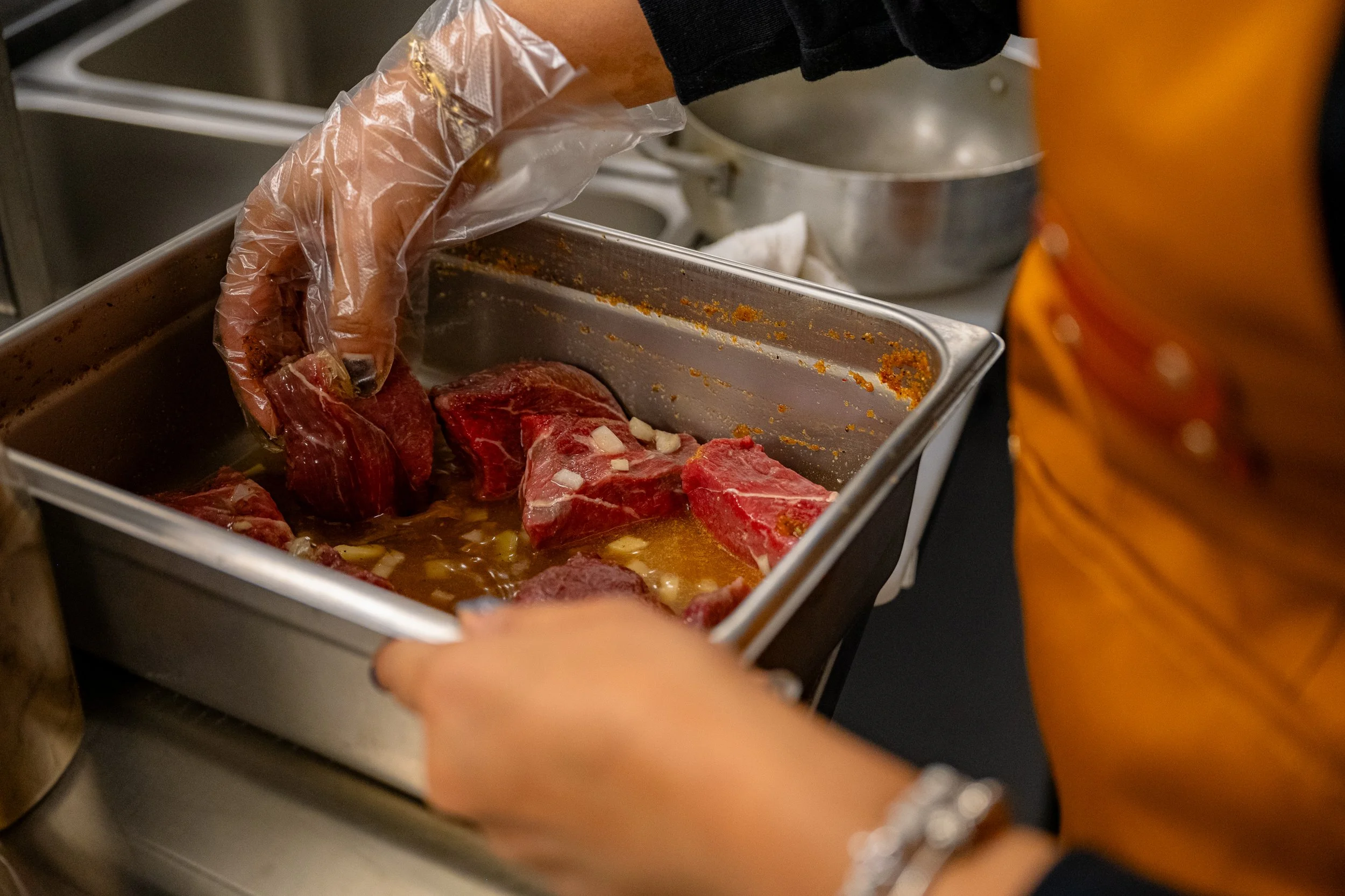
Food prep at Little Liberia. Image courtesy of Juan Carlos Dueweke-Pérez
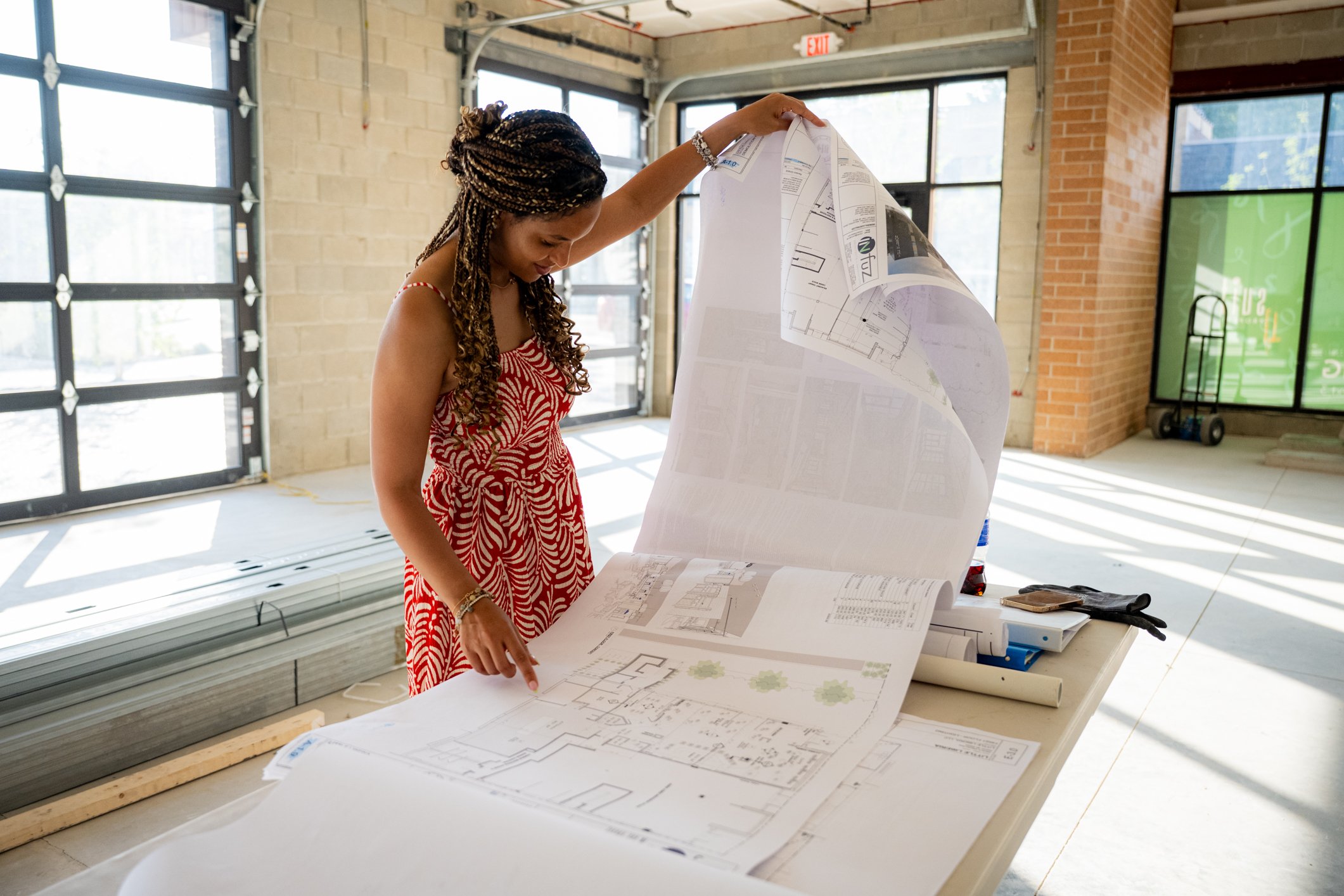
Owner Ameneh Marhaba reviews the blueprints. Image courtesy of Juan Carlos Dueweke-Pérez
“When you eat it, you feel like you're eating at home. It's not like a fast food restaurant; our stews take hours to cook,” she says. “It takes a lot of love, a lot of breath, and a lot of heart to make the things that we're making. So if someone's coming to have it for the first time, I would say just expect a sense of comfort.”
Comfort comes in the form of tender cassava leaves and beef simmered in a rich stew; juicy goat shank slow-roasted with savory spices; falloff-the-bone grilled chicken served with plantains and roasted vegetables; and a whole snapper dinner paired with grilled peppers, onions, and rice—country dry or jollof. Vegan and vegetarian options include collard greens and kidney beans simmered in a savory tomato sauce. You’ll find appetizers on the menu like pepper kala with a spicy sauce, roasted chicken wings in a peanut marinade, caramelized plantains, and my favorite —the grilled lemon, garlic, and cilantro shrimp.
As we sit together at the restaurant’s bar, Ameneh pauses our conversation to answer questions from her kitchen staff. In this soft open phase, she’s working to put on paper the recipes her hands know by heart. Laughter and joy echo from the kitchen, where her mother and longtime friend regularly cook at her side. Family members have helped construct every dining table. A cousin serves as hostess, seating guests and collecting feedback on comment cards, which she reads to the chef at the end of every night. It’s been a busy time of learning and refining; a family affair with a passionate, determined, detail-oriented captain at the helm.
“It all literally just feels like a vision, honestly, because this process takes years, as you can imagine,” says Ameneh. “So seeing people coming in here, and everyone, just seeing it be what it is, that took years in the making, every single tiny thing.”
I wanted it to be inviting,” she says as she runs her hand along the grain. “So many bars are dark.” The colors in the space deepen as you head back toward a cozy private dining area.
The front of the restaurant boasts street-view dining, high-top chairs, and custom-designed merchandise that emphasizes style and education.
On the sweaters and hoodies for sale, you’ll find facts about Africa tucked onto sleeves: 54 nations make up the continent where over 2,000 languages are spoken; Africa’s Nile River is the longest in the world, and its Sahara Desert is the largest hot desert; okra, blackeyed peas, and watermelon originated on the continent; and where in Africa Liberia is located.
“We're educating people about the continent and the culture,” Ameneh says. “So if you were to get a sweatshirt, you're literally learning about something that maybe you don't know about.”
She looks forward to spotlighting Liberian art on the walls, as crafts and textured arts are a big part of the culture. She plans to have more details like this in place by the restaurant's grand opening later this spring.
In the meantime, she is working on creating processes and filling staffing positions, something that remains a challenge in the food business post-COVID-19. The restaurant is currently hiring servers, a dishwasher, a prep cook, a line cook, and a bartender. If you’re interested in joining this restaurant family, you can apply on the website.
In addition to securing dedicated staff, Ameneh says food costs are a challenge, especially because she’s using specialty ingredients, which, given the small local Liberian population, she sources as best she can from small African markets that must incur and pass on high shipping and sourcing costs. She wants to offer an affordable dining experience, she says, keeping all her main dishes under $30. Higher food prices mean the industry is seeing narrower profit margins to keep customers coming. She says she, along with others, especially those using specialty ingredients, have to set their prices somewhere between what they’d like to fairly charge based on ingredient costs and what patrons are willing to spend.
She says she plans to keep a small menu to specialize in dishes and keep costs down, but is working on a few more appetizers and desserts, as well as vegan, vegetarian, and gluten-free options. Soon, she’ll also offer a simple cappuccino or espresso, along with a baked good. LaNika Hampton, founder of Aura Vibez Studios and resident at The Ribbon, says she loves how she can just walk downstairs for a meal, a drink, and a bit of community.
“It's such cozy, relaxing vibes there. I’m excited to see the flower shop and everything else open up, too,” says Hampton. [Jermaine Jackson, coowner of Flamz Pizzeria, is expected to open a flower shop in the space next to Little Liberia] “Makes me feel like I live in a fancy 5-star hotel.”
Recently, Hampton and her brother enjoyed the Check Rice Gravy, a dish of golden-seared chicken in a rich tomato-vegetable sauce, paired with bright green rice infused with fresh greens. Her favorite cocktail is the Liberian Girl, a cherry whiskey-based tropical infusion, but her goal is to try a different signature drink with each visit.
Most of the residents have come for dinner and a show of support, even grabbing packages for her on days she isn’t there, Ameneh says. This sense of community is what drew her to E.Warren. Talking with customers who’ve walked or driven from the surrounding neighborhoods and seeing the transformation along the corridor, a little more each day, has her excited.
This business is coming, that business is opening, this other spot is opening down the street. We have the coffee shop,” she says. “We could create our own destination.”
Reserve your table and sign up for Little Liberia’s newsletter at https://www.littleliberia.com/
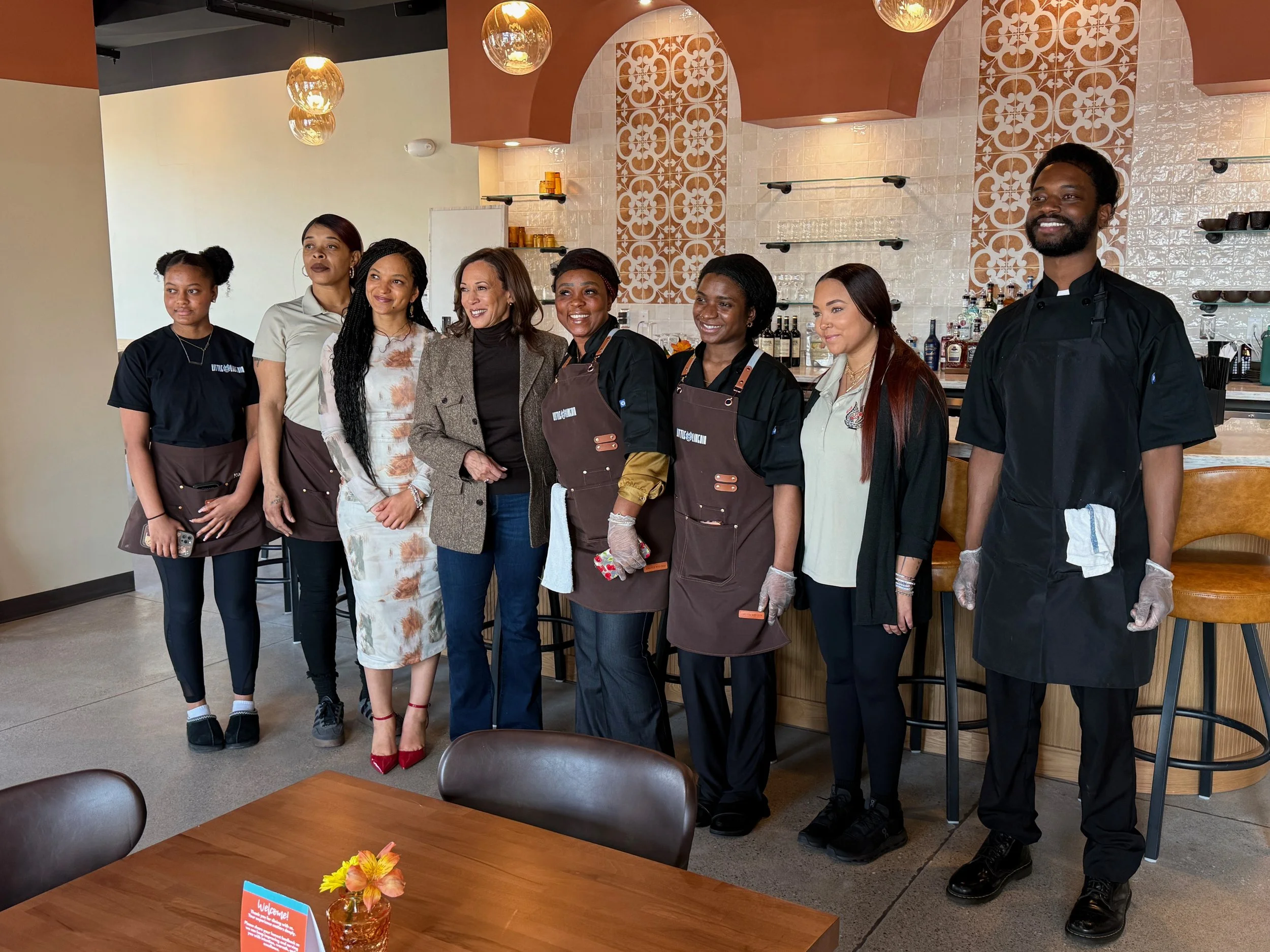
The Little Liberia staff recently welcomed a special guest, the former Vice President, Kamala Harris. Image courtesy of Juan Carlos Dueweke Pérez