Council Votes to Slow Down Consideration of Data Centers in Detroit
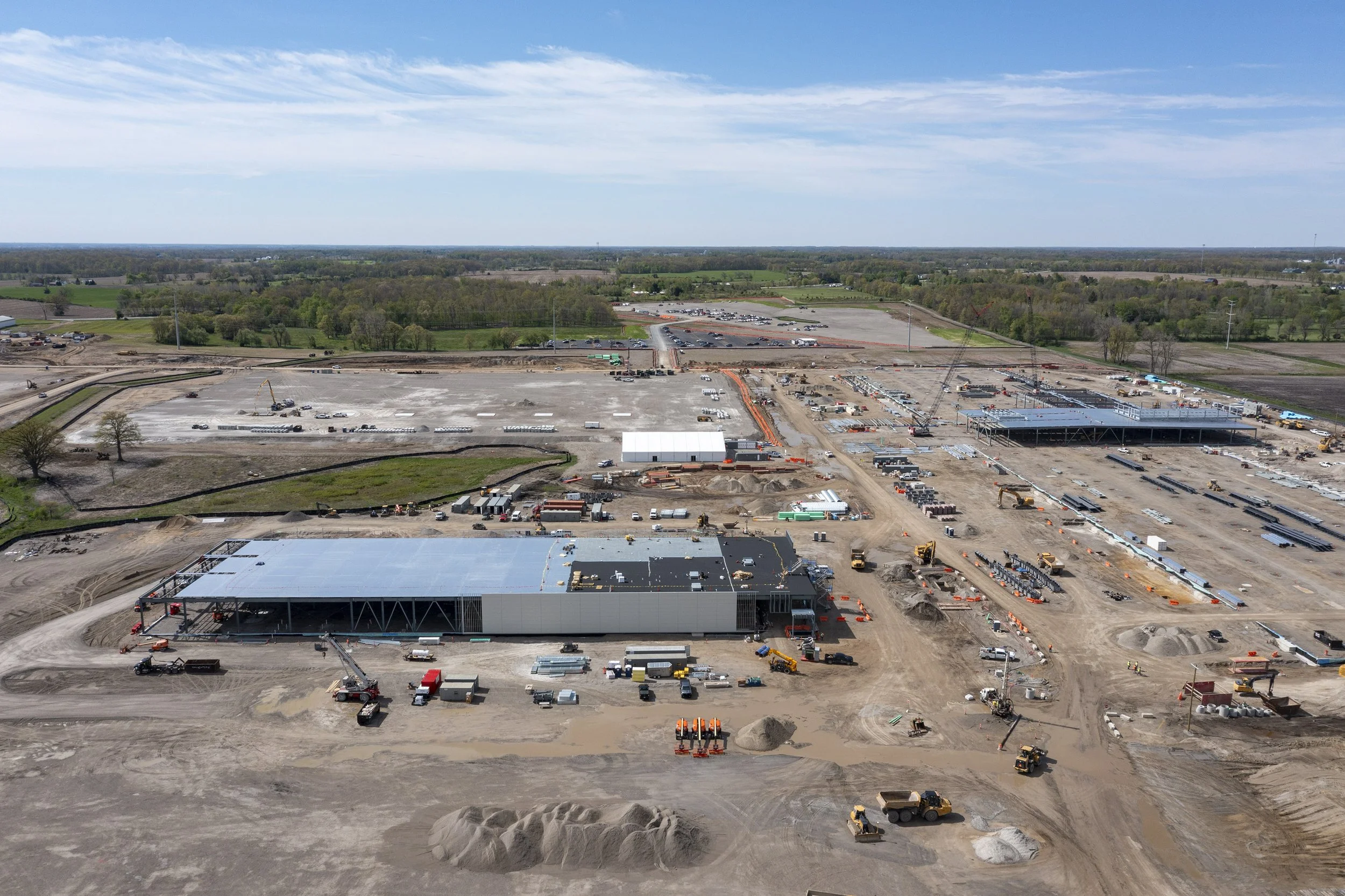
The Data Center currently under construction in Saline Township. Image courtesy of Jim Wes
A proposal for a new AI data center on Detroit’s eastside, north of the Stellantis plant, was submitted late last year by an unnamed developer. The facility would cover land the size of eleven football fields.
City Council has pushed back. Councilmember Latisha Johnson was one of the six members who passed a resolution calling for a two-year moratorium on building data centers. They say the city needs time to evaluate the many social, economic, and environmental impacts of data centers. The resolution is now on Mayor Sheffield’s desk for her consideration.
The AI revolution is moving forward at a head-spinning speed, and so are the data centers that power it. It’s difficult to know exactly how many already exist in the US because there are no federal registration requirements for them. But the well-respected Pew Research Center estimates that there are already over 3,000 in the US, with another 1,500 in various stages of development. Most are in rural areas because data centers require large tracts of land, but Detroit’s 18 square miles of vacant land are beginning to attract the attention of AI developers.
In 2024, the Michigan state legislature created tax incentives for AI developers, making the state more attractive for investment. There are currently 44-75 operational facilities in Michigan, with more than 30 new ones proposed or being constructed.
Although AI is very abstract, the data centers that power it are not. They’re physical facilities that house networked computers, servers, and data storage equipment. They act as the foundational infrastructure of the internet, processing and storing the information required to run websites, stream videos, utilize cloud storage, and power artificial intelligence.
Data centers have been around for decades, but generative AI has dramatically ratcheted up the demand for energy.
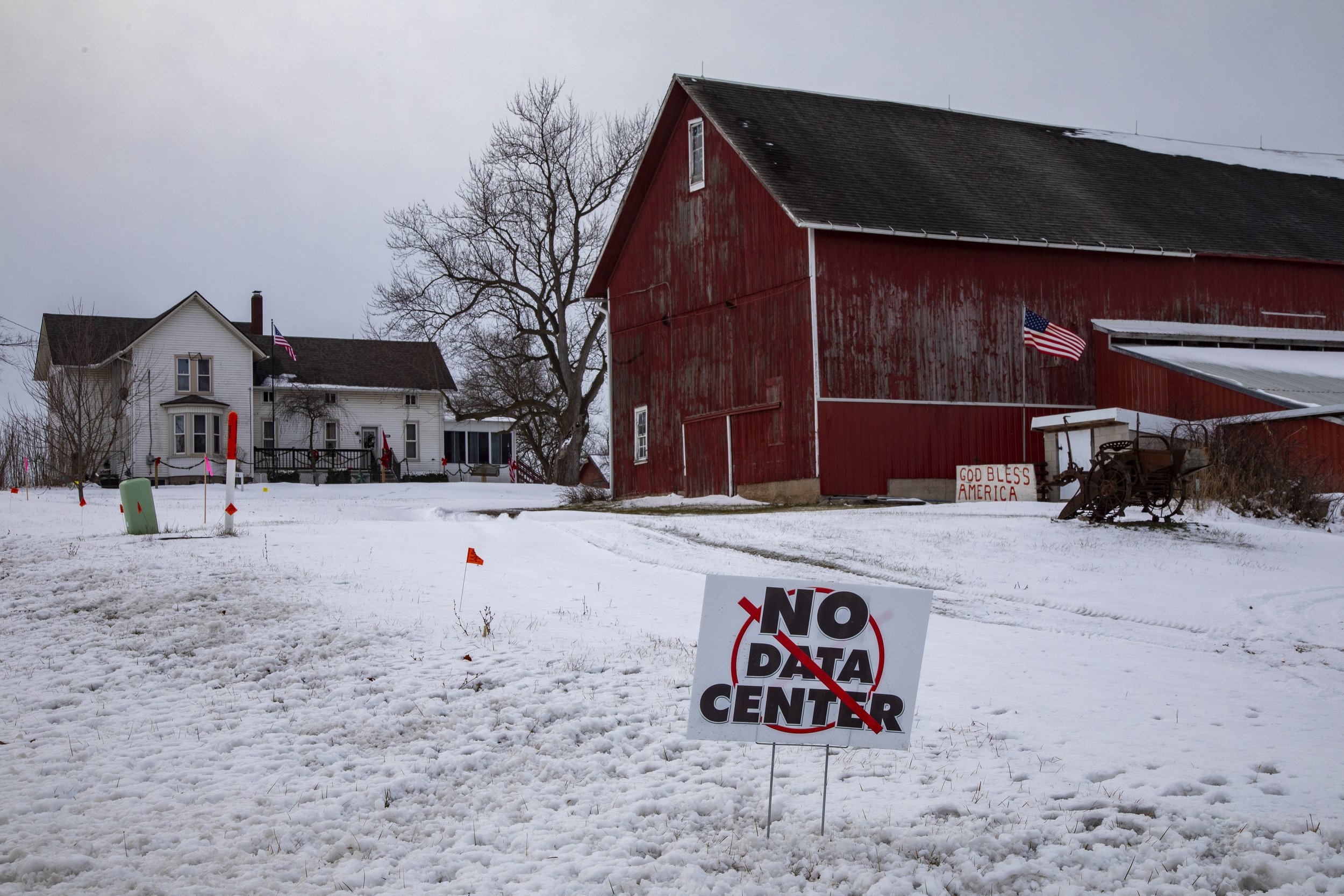
Opposition is strong against the Data Center in Saline Township. Image courtesy of Jim West
Local communities nationwide have become concerned because data centers require vast amounts of water to cool the computers and electricity to power them. Communities that already have data centers have experienced tremendous strain on their electrical grids and water supplies, leading to dramatic increases in utility bills, power outages, and disruptions in the water system. Disposing of the wastewater created by the data centers also puts a strain on their sewer systems.
Noise and air pollution often accompany data centers.
Proponents of data centers say they provide thousands of new jobs; however, many of these are temporary construction jobs that disappear once the data center is built. The tax revenues that data centers generate vary widely, depending on the tax abatements that local communities offer developers.
Given the many ways that data centers could impact our city, Eastside Community Network has launched a study group for residents to learn about the risks and benefits of data centers and develop policy recommendations to keep their development under community control. We’ll be keeping a close eye on this important story.