
“Arthur Murray” Building Comes Back to Life, With New Affordable Housing
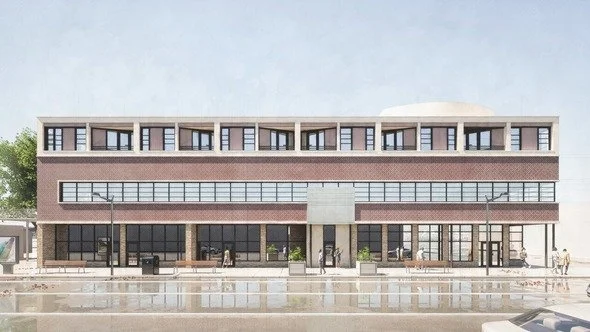
Rendering of the Arthur Murray building. Image courtesy of the city of Detroit
Long after the last dancer had tapped a toe at 16641 East Warren Ave., residents in the neighborhood still called the building the Arthur Murray, recalling the dance studio it once housed. If you go by the building today, you’ll see construction workers giving it a new life; but it will still keep its name and façade, in honor of its rich history.
It was in Detroit that dancer Doris Eaton Travis launched the first Arthur Murray studio beyond New York, where she had gotten her start as a showgirl in the Ziegfeld Follies. She had danced her way into silent movies until the 1930s depression, when she felt grateful to get a job teaching for Arthur Murray. His studios grew in popularity during the dancing craze that followed World War II, nourished by his popular TV show.
Ms. Travis was lured to Detroit by “that excited feeling that Detroit was my new blue bird,” as she later wrote. In 1938 she opened several dancing studios in a downtown hotel. She met her husband there and even taught Henry Ford II to dance.
Doris moved the business to our neighborhood in 1952, where it became the first of 19 studios she owned in Michigan.
Travis left Michigan in 1970, but for a time the building kept its doors open, hosting businesses like Mom’s Toy Attic and Soccer Specialists.
When Robin Rutz Prudin was a kid she took ballet lessons in the building from a woman who reportedly once danced for the Royal Ballet of London. She recalls “so many happy memories of growing up in that area!”
But by the time Detroit Councilwoman Latisha Johnson moved to Yorkshire, the “Arthur Murray” building was empty. Johnson loved the neighborhood, and became active in EEV as a street rep. While watching over the neighborhood, she was alarmed to see people taking insulation and other materials out of the now-empty building. But back then, it was hard to even figure out who owned it.
Now Johnson is a City Councilmember who sits on the Planning and Economic Development committee, where she’s a key player in the process of bringing new life to the building. After several stages of City review and approval, including a public hearing in September 2024, the project won more than $2 million in State funding, and is the first development to take advantage of the new housing tax increment financing program.
At the ground-breaking ceremony for the revamped building, Johnson said the project will likely encourage more development and “create the kind of walkable community” planners want to see.
Just knowing that the project was in the works helped convince Jay and Sarah Williams to locate their popular Next Chapter Bookstore in the neighborhood. “We could see that a lot of things were going to grow around us.” Jay explains. He found the Arthur Murray groundbreaking exciting, adding that “now we get to watch it transform every day.”
The developer is Emory Matthews, a native Detroiter who heads REI (Real Estate Interests). He consulted with community members before securing financing and plans to “make sure the building honors its legacy.” He wants to save the Arthur Murray logo that was on the flooring and preserve the big white panel over the entrance where the studio name used to be. “We are still calling this the Arthur Murray Studio building.”
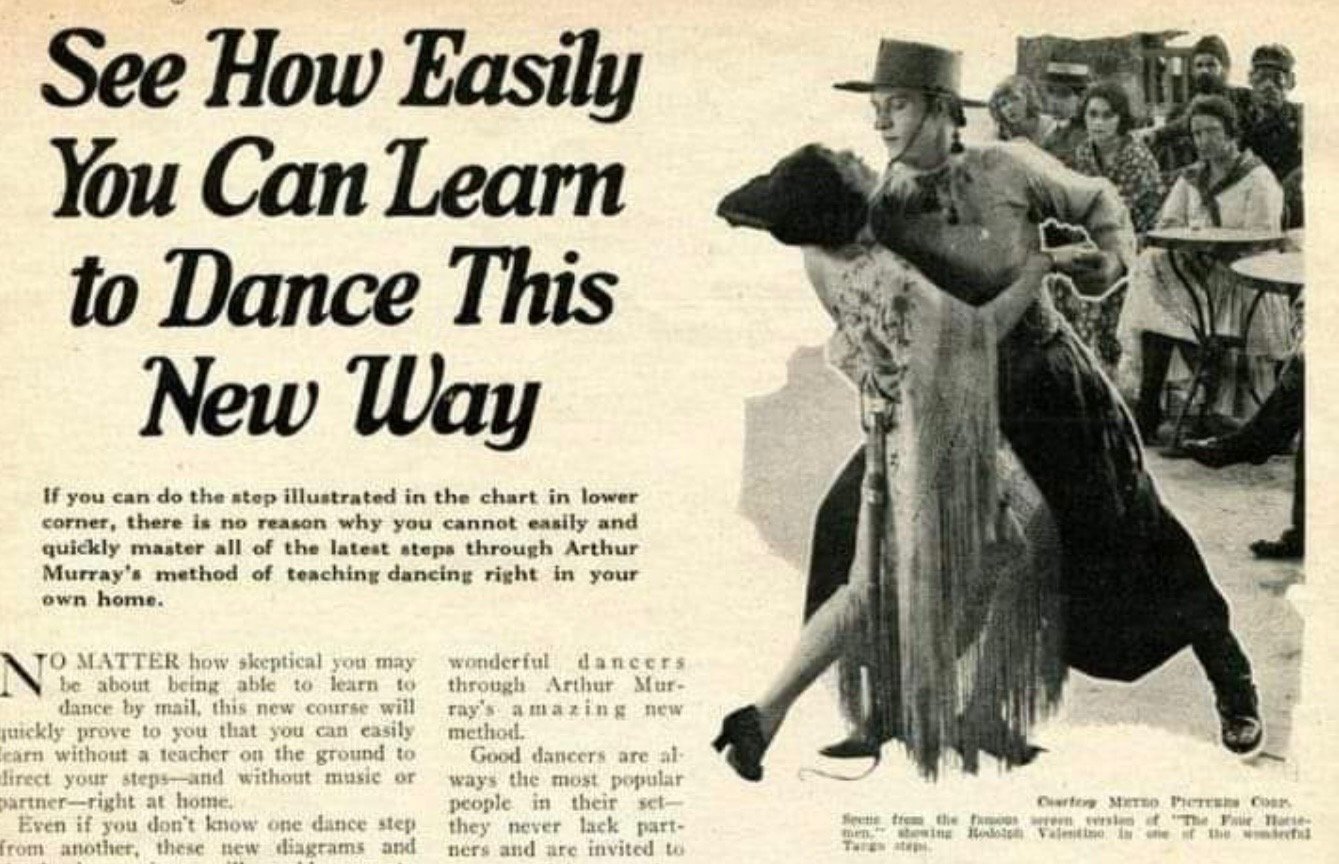
An original ad promoting the Arthur Murray dance studio. Image courtesy of the city of Detroit
Matthews expects the work to be done by the end of this year, and already has businesses lined up for new ground-floor offices – including Activate Detroit, a company that helps bring community projects to life.
The top two floors will house 32 residential apartments, all of them affordable for people who make 60 – 100% of the area’s median income, plus a community gathering space.
“If it weren't for the people in this community, I wouldn't be here, this project wouldn't be here," Matthews told WXYZ, which did an excellent news story on the ground-breaking. “The Arthur Murray building is more than bricks and mortar — it’s part of the fabric of a neighborhood that has endured, adapted, and held on with quiet strength.
“We aim to build a future rooted in respect for the past.”